
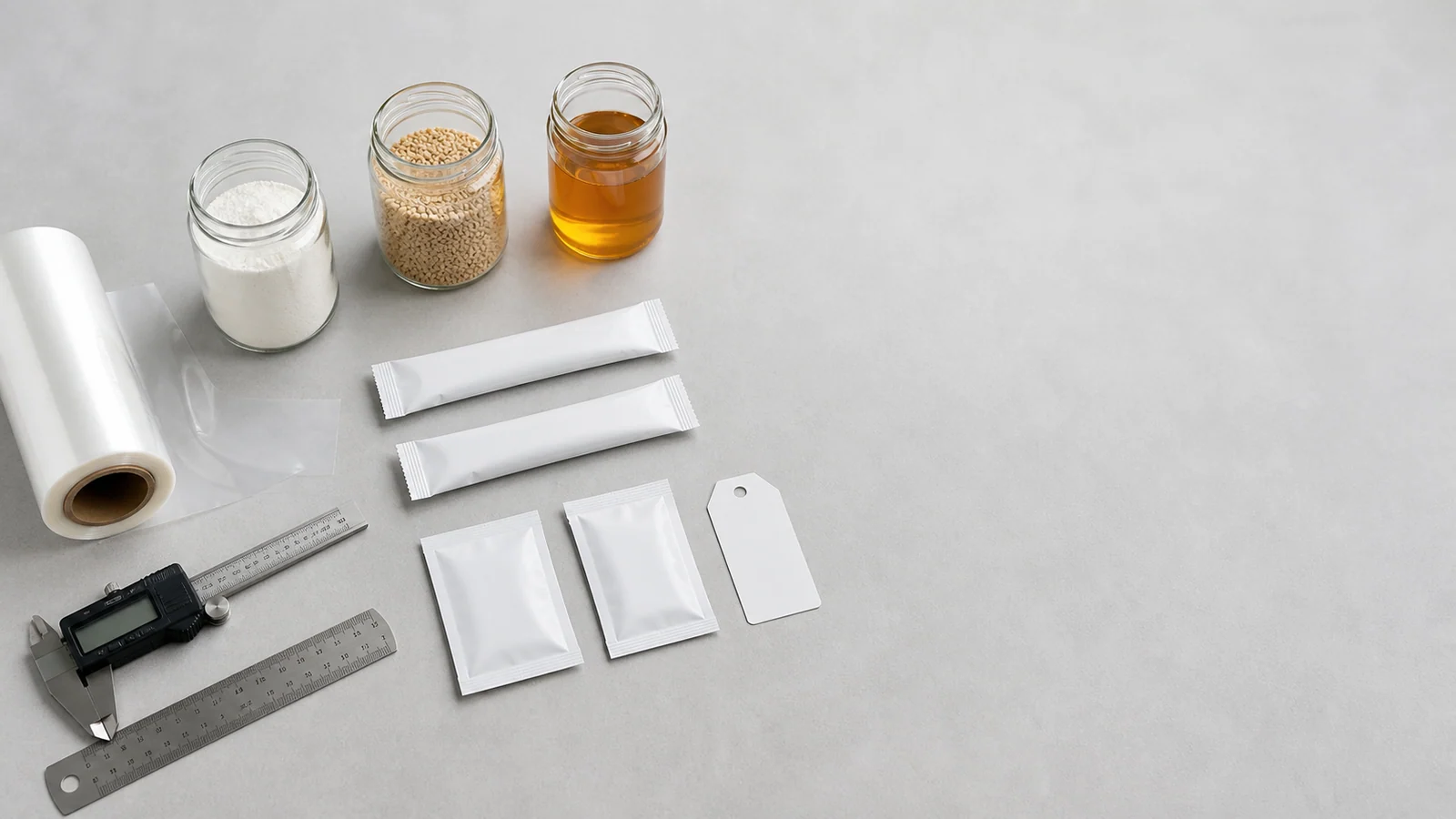
A clear checklist for samples, film, pack format and operating conditions.
Prepare a representative sample, not a convenient sample
Identify the product, batch, date, storage condition and the process state the sample represents. Include enough material to observe startup, stable running and refill behavior rather than a single short dose. If moisture, temperature, settling or aeration changes handling, define how the sample should be conditioned and transported. Record any reason the available sample may not represent future production.
A sample test is valuable only when the material, film and question being tested represent the intended project.
Bring the physical pack definition into the test
Provide the intended film structure where possible, along with width, length, seal layout, tear feature, artwork registration and code area. A substitute film can answer a narrow mechanical question, but it should not be used to imply that final sealing or appearance has been established. Include a finished-pack reference or dimensioned drawing so the test can compare the output with the intended physical result.
Write the decision the test must close
Choose a limited set of questions: flow stability, portion variation, cutoff, breakage, seal-area contamination, discharge orientation or another observable condition. Define how results will be measured, which variables are held constant and which assumptions remain open. The test record should finish with a decision, a required retest or a clear list of information needed before engineering definition continues.
How to record output during a sample test
Agree the counting unit and point before the run, such as individual packs at a named exit or completed outer packs downstream. Keep that basis consistent.
Record the observation start and end times and duration, stating whether stops are included. Log each stop’s duration and reason. For that window, record total output and, separately, output meeting the agreed checks. Name those checks.
Explain where rejected or scrapped packs are counted and removed, and how any rework enters the record, so the same pack is not counted twice. Keep counts from different points separate. Record machine cycles separately; a cycle count alone does not establish the number of packs produced or the output meeting the agreed checks.
For general definitions of production losses and reporting units, see the OpX/PMMI guide.