
Stick Pack Machines
Multi-Lane Powder Stick Pack Machine
Pack powders into individual stick packs with a multi-lane machine. Start with your powder, target fill weight and pack size, then review dosing, film, sealing and the equipment needed after packing.
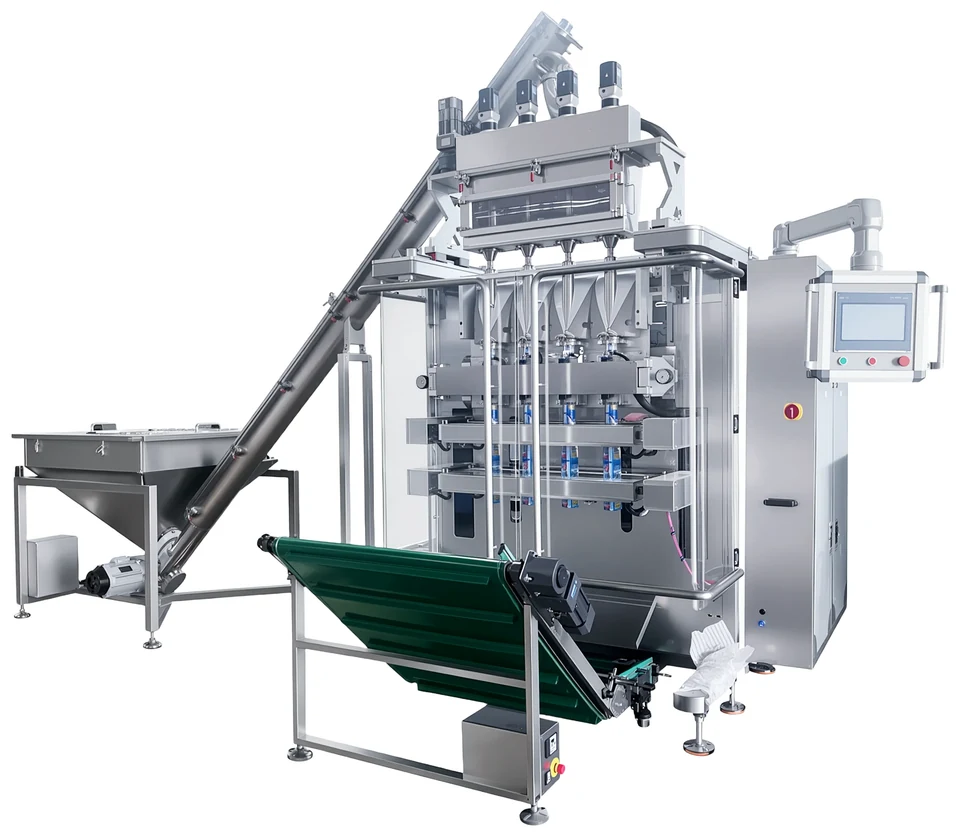
See the machine from feeding to discharge
The pictured arrangement brings together a feed system, multi-lane packaging machine and discharge conveyor. Use this overview to understand the equipment layout before reviewing the dosing, pack and downstream requirements below.
Watch this feed-system arrangement
This feed-system arrangement is a different configuration from the ten-lane example below.
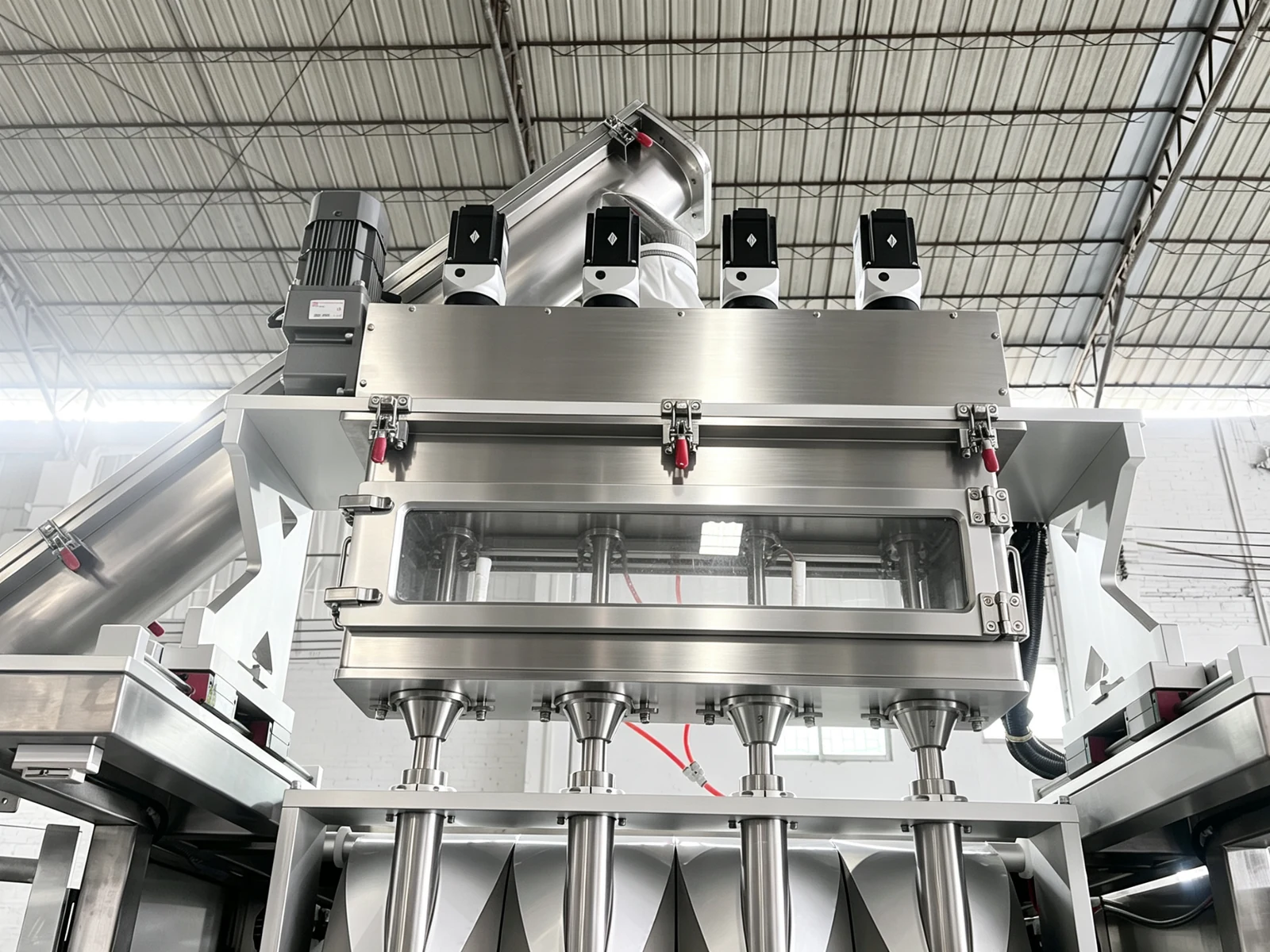
Powder behaviour comes before the dosing configuration
Powders with the same product name can behave differently after blending, storage or refilling. Changes in flow and bulk density can affect filling consistency. Compare the proposed feeding and dosing arrangement using representative powder, with fill weights checked across the agreed run and refill conditions.
Compare dosing methods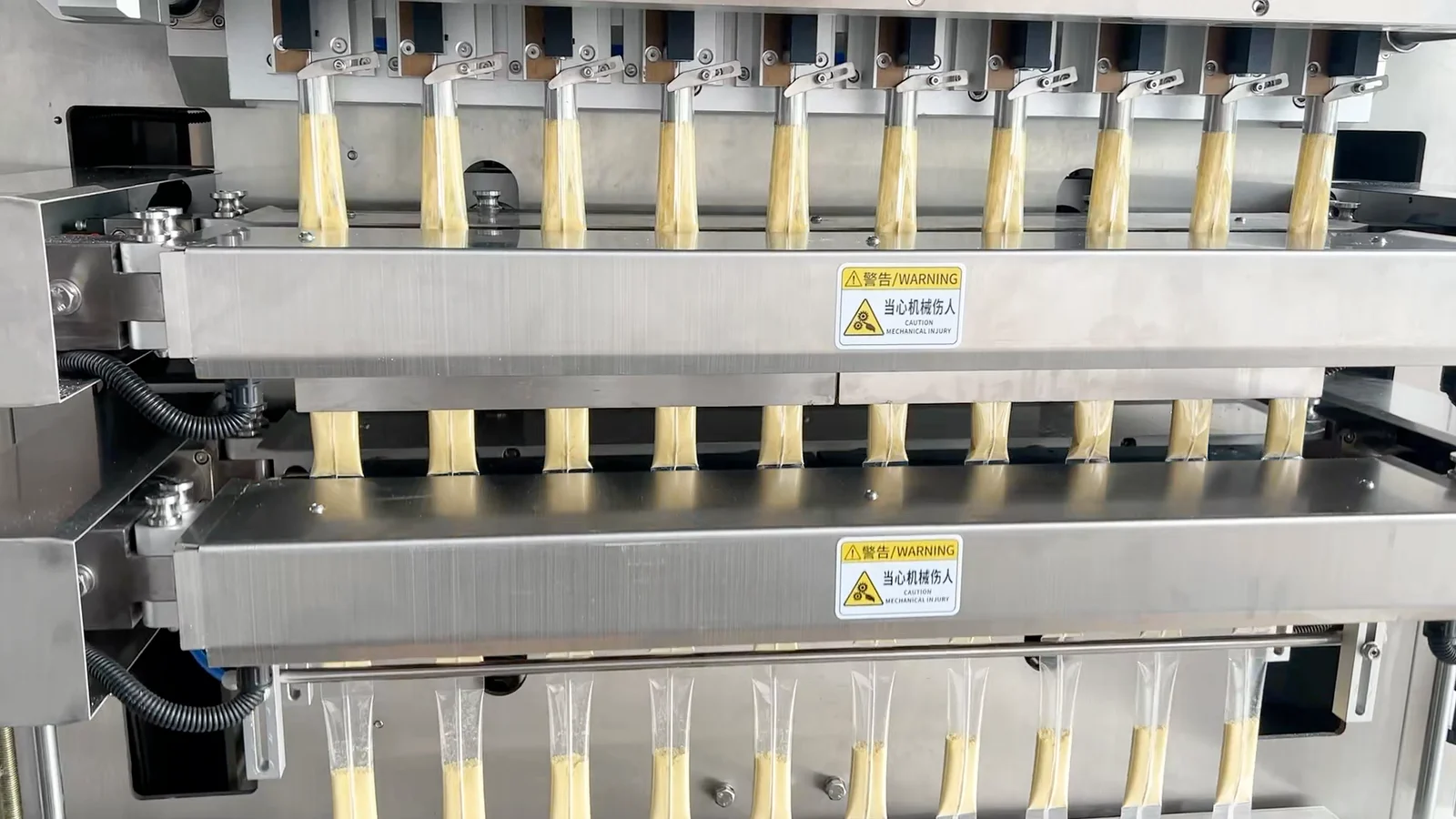 Watch the ten-lane example
A correct fill weight is only one part of a good stick pack
A stick pack must hold the intended dose and close reliably. Powder reaching the sealing area can affect seal quality, so evaluate filling and sealing together with the intended film and pack format. Check weight, the seal area, leaks and opening behaviour against agreed acceptance criteria.
Prepare product and film testingMachine discharge is not a complete downstream line
The pictured machine shows feeding, packaging and discharge. Inspection, rejection, counting and cartoning are separate scope decisions. For a machine-only purchase, define how finished sticks will be collected; for an integrated line, define the required handover, equipment responsibilities and acceptance checks.
Explore integrated-line scopeBuyer questions
Powder stick pack machine questions
- What information is needed to assess a multi-lane powder Stick Pack machine?
- Start with the representative powder condition, target portion, Stick Pack dimensions, film direction, seal and opening requirements, destination country and intended line boundary. Unknowns may remain, but they must be marked.
- Why can the actual speed not be promised from a web page?
- Achievable output depends on powder condition, portion, pack, lanes, sealing window, inspection and downstream constraints. A project speed must be tied to an identified configuration, condition and acceptance method.
- When is sample testing needed?
- Use a controlled test when flow, bridging, portion variation, seal contamination, film tracking or discharge behavior lacks representative evidence. Define the question, condition and recording method first.
- Where does the primary machine end and an integrated line begin?
- The primary route usually covers feeding, dosing, forming, sealing and basic discharge. Inspection, reject, counting, cartoning and other downstream operations enter scope only after the project boundary is confirmed.
Start with the information you have
A powder stick pack machine quote depends on the feeding and dosing route, lane and pack configuration, product-contact and cleaning scope, and inspection or downstream equipment. Compare prices on the same scope, with included and separately supplied items identified.
| Your input | Configuration review | Decision to record |
|---|---|---|
| Powder name/photo, representative sample, storage and handling conditions, flow or dust observations, target fill and allowed variation. | Assess the proposed feeding and dosing route, including auger filling where appropriate; check filling during running and refill. | Dosing configuration to evaluate and the agreed fill checks. |
| Pack drawing, film details, coding and opening requirements, and required output. | Review the proposed lane/pack setup; test sealing, powder near the seal, leakage, opening and cutting with the intended product and film. | Pack/lane scope to quote and the trial conditions/results it depends on. |
| Product-contact material, cleaning and product-changeover requirements. | Identify the contact parts and cleaning access to review for the proposed configuration. | Included contact-part and cleaning scope, with unresolved requirements identified. |
| Collection, inspection, rejection, counting and downstream requirements; existing equipment. | Agree where the primary machine ends and what each supplied or existing unit must do. | Included equipment, separate supply and connection responsibilities. |
Include the destination country. Share the information already available and identify open points.
Agree the test questions, sample quantity and receiving arrangements before shipping material.
Choose the next step