
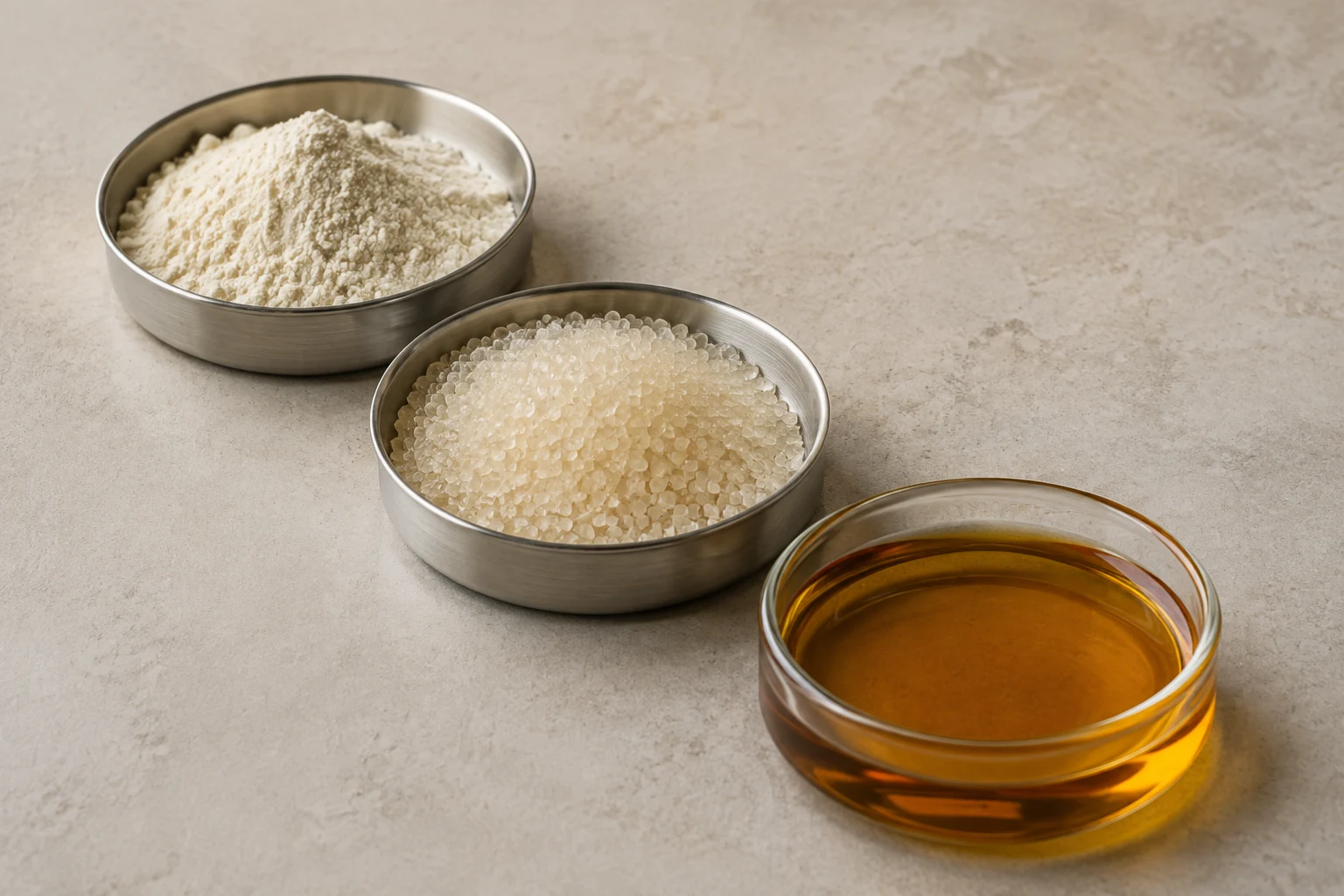
A practical route from observable material conditions to the inputs an engineering review needs.
Observe the material in the condition that will reach the line
A useful review begins with a representative sample and the conditions around it. Record bulk density, moisture exposure, aeration, particle-size distribution and any visible tendency to bridge, segregate, settle, foam or string. The same commercial product can behave differently after transport, storage or a recipe change, so a generic label such as powder, granule or liquid is not enough to select a dosing route.
A dosing method should follow observed product behavior, not the product name printed on a sample bag.
Translate behavior into a dosing question
Connect each observation to a testable requirement. Free-flowing particles may raise questions about gate control and drop height; fragile granules may require attention to impact and breakage; an aerated powder may change bulk density after refill; a viscous liquid may need a defined temperature and cutoff criterion. This step creates a shortlist of principles to test without presenting any method as selected before the sample evidence exists.
Record the conditions behind every result
A useful sample review records the sample identity, test condition, target portion, weighing method, refill state and the variation observed across a defined sequence. It also records what remains unknown. The result should tell the project team whether the candidate route can move forward, whether another sample condition is required, or whether pack and seal constraints change the direction of the review.